Starting your first elementary music teaching job can feel exciting, overwhelming, inspiring, and exhausting all at once. You are learning names, building routines, figuring out curriculum, managing instruments, and trying to stay one step ahead of hundreds of students every single day. The good news? You do not need to have everything perfectly figured out during your first year.
Below are five practical ideas that can help you save time, build confidence, and create a positive classroom environment right from the beginning.
Read More
As the school year comes to a close, many elementary music teachers begin preparing for one of the most meaningful moments of the year: graduation and moving up ceremonies. Whether your students are leaving preschool, crossing a bridge into a new grade level, or celebrating the end of elementary school, music can make these milestone moments even more memorable.
Read More
🎶 Looking for Play-Along Videos for End-of-Year Songs in Your Music Class? 🎶
Whether you're prepping for graduation, a moving-up ceremony, or just want a fun way to end the year, I’ve got you covered! I’m creating easy-to-use play-along videos that your students will love—featuring ukulele and boomwhacker parts for "Time of Your Life" by Green Day. 🎸🎼
Bring some musical magic to your final lessons of the year!
Read More
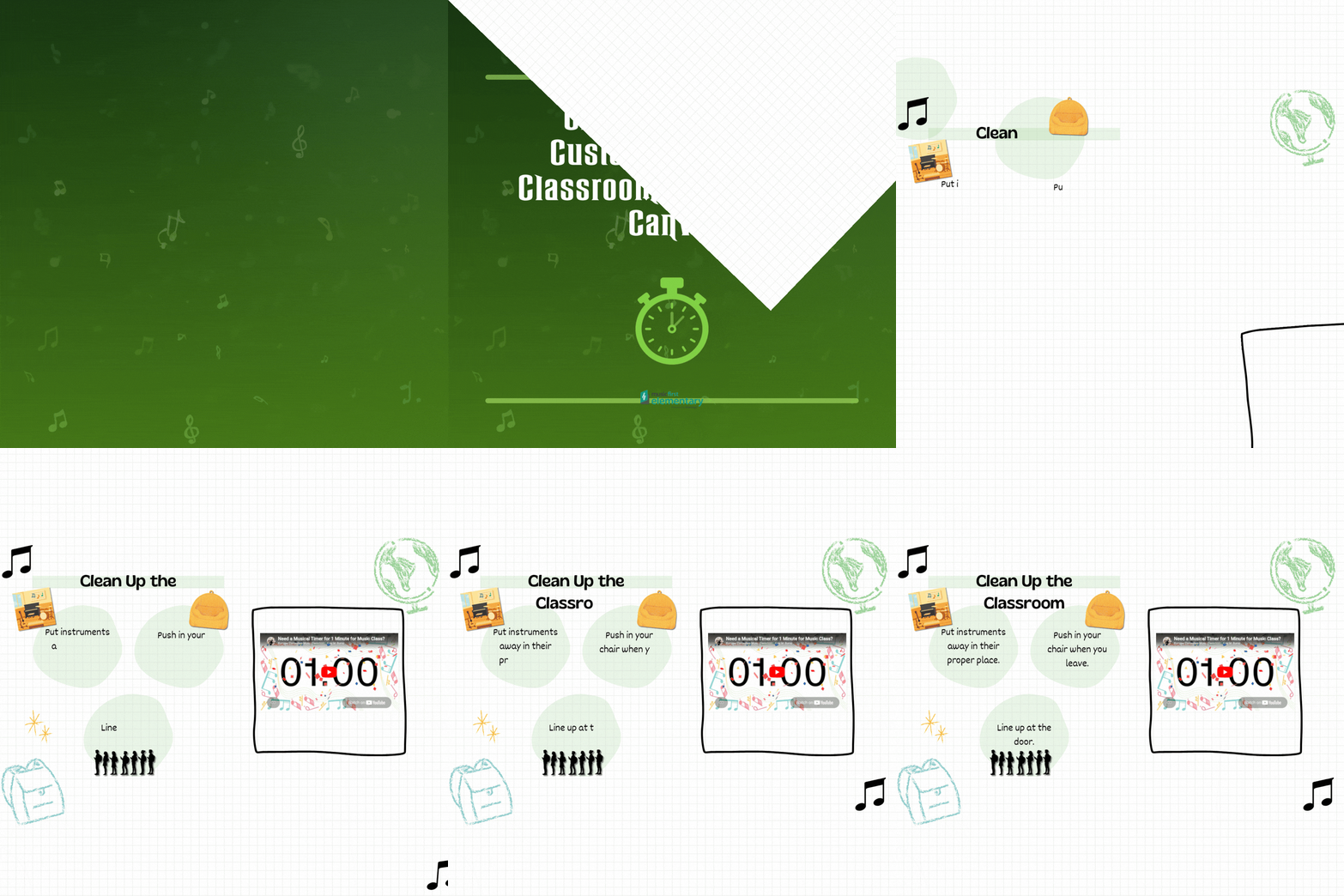
Timers can be a game-changer in the elementary music classroom. They help students transition between centers, prepare instruments, clean up efficiently, and even refocus during calming moments. While there are many premade timers online, creating your own allows you to customize the visuals, music, and overall vibe to fit your classroom perfectly.
One of the easiest ways to create customized timers is with Canva. Here’s the process I use to make my own music classroom timers!
Read More
Yesterday, I came across a post from Mrs. King’s Music Class where she shared music timers she uses in her classroom. It reminded me just how valuable timers can be in an elementary music setting. While timers may seem like a simple classroom tool, they can completely transform transitions, pacing, classroom management, and even student self-regulation.
In the elementary music classroom, every minute matters. Whether students are rotating through centers, setting up instruments, transitioning to movement activities, or simply taking a moment to reset emotionally, timers can provide the structure and predictability students need.
Read More
Are you searching for the perfect kindergarten end-of-year song? As the school year winds down, many elementary music teachers are looking for meaningful, engaging songs that celebrate growth, community, and moving on to first grade.
Here are five tried-and-true kindergarten graduation songs that are easy to teach, memorable for families, and adaptable for performances.
Read More
A Simple System That Saves Time
When I need to put together sub plans quickly, I rely on a reusable Google Slides template. If my substitute can log into Google Slides (using a school-created sub account), everything is ready to go.
Here’s how it works:
I update one title slide with the day’s schedule
Each grade level is clickable and links to its lesson
The substitute simply clicks and teaches—no guessing
Students follow along with activities like:
It keeps the day structured and familiar for students—even when I’m not there.
The Real Problem: Time + Messy Slides
Read More
It is that time of year! It is the week when May 4 will fall on a school day and you can celebrate two celebrations: May The Fourth Be With You and Dave Brubeck Day! This year, I created a rhythm play-along to John Williams's Theme to Star Wars, conducted by Henry Mancini, From The Reader's Digest Music: Wizards & Dragons - A Fantasy Game Mix. Like my resources? Please consider buying me a coffee at https://www.buymeacoffee.com/elmusedtech
Read More
It's that magical moment each year when May the Fourth swings by, and music educators in elementary schools turn it into "May the Fourth Be With You" extravaganza! Picture music vibes from John Williams's Star Wars tunes and jazzy beats like "Take Five" by Paul Desmond, courtesy of the Dave Brubeck Quartet. With a galaxy of over 90 awesome activities to pick from, I've whipped up a Wakelet featuring these fantastic categories:
Movement (Move-Its) Activities
Parachute and Scarf Activities
Rhythm Play-Alongs
Boomwhacker Play-Alongs
Orff, Ukulele, and Recorder Play-Alongs
Music Creation Activities
Line Rider and Fun Videos
Lesson Resources (Some free and some paid)
5/4 Extra Activities (involving Take Five)!
Tip: Please view the video in your classroom before you use it with your students to make sure it is appropriate for your teaching scenario and your age group.
Read More
ttps://www.youtube.com/watch?v=Wb2Io272NMc
With Earth Day this week, it is always important to keep the 3Rs in mind. In particular, we refer to the principles of Reduce, Reuse, and Recycle. Jack Johnson's song of the same name is composed of two basic chords - C and G. The C chord is a great starting point for beginners on the ukulele. This song can be a valuable tool for students to learn G.
Read More
In celebration of Ella Fitzgerald’s special day this week (April 25) and the fact that April is all about Jazz Appreciation Month (JAM), I've whipped up a groovy play-along video to Ella's rendition of "Old MacDonald Had a Farm" from her appearance on The Ed Sullivan Show back on November 29, 1964. Like my resources? Please consider buying me a coffee at https://buymeacoffee.com/elmusedtech
Read More
What are you doing in preschool music class?
This is one of my go-to lesson flows:
✔️ Warm-up (steady beat, breathing, focus)
✔️ Song application (Ten Little Speckled Frogs)
✔️ Add movement + counting + manipulatives
Read More
Looking for a clear, student-friendly way to teach recorder? These fingering charts are designed with elementary learners in mind and can be used for whole group instruction, centers, or independent practice.
Read More
Looking for a high-energy play-along that instantly hooks your students? This one starts with something your students will immediately recognize…
👉 “What were… in the 90s?”
That familiar trend pulls students in right away—and before they know it, they’re stepping into the world of MC Hammer’s “U Can’t Touch This” (1990) with instruments in hand and ready to play.
Inspired by a fantastic idea from music educator Vicky Suárez, this play-along blends nostalgia, humor, and solid musical learning into one engaging classroom experience.
🎥 What Makes This Play-Along So Engaging This isn’t just another play-along—it’s an experience.
The video opens with the trending “What were… in the 90s?” prompt to instantly grab attention
A cartoon hammer conductor leads the ensemble (yes… wearing hammer pants!)
A dance break featuring MC Hammer adds humor and energy
The song leaves out lyrics that might not be suitable for an elementary music class
Backup dancers are tastefully blurred to keep everything classroom-appropriate
Students stay actively involved the entire time through playing, listening, and moving
It’s the perfect mix of nostalgia, engagement, and musical learning.
Read More
This might be old news, but Canva's layout is changing, which prompted me to explore the Image to Video tool. Hope this helps!
🎥Check out the video here!
Read More
April Fool’s Day just got a musical upgrade! 👀🎶
These play-alongs start normal… then surprise your students with glitches, twists, and even a classic Rickroll!
Fun, engaging, and full of musical learning—your students won’t see it coming!
Read More
Looking for a memorable April Fools’ Day activity that still reinforces core musical skills? This "April Rhythm and Movement Play-Along” is designed to keep students engaged, thinking, and laughing—while strengthening steady beat, listening, and response skills.
In this lesson, students begin by following a steady beat to The Syncopated Clock by Leroy Anderson, then experience a series of unexpected “glitches” that challenge their focus and musical understanding. Just when they think they’ve figured it out… the system breaks completely and shifts into a totally different, golden musical style!
Read More
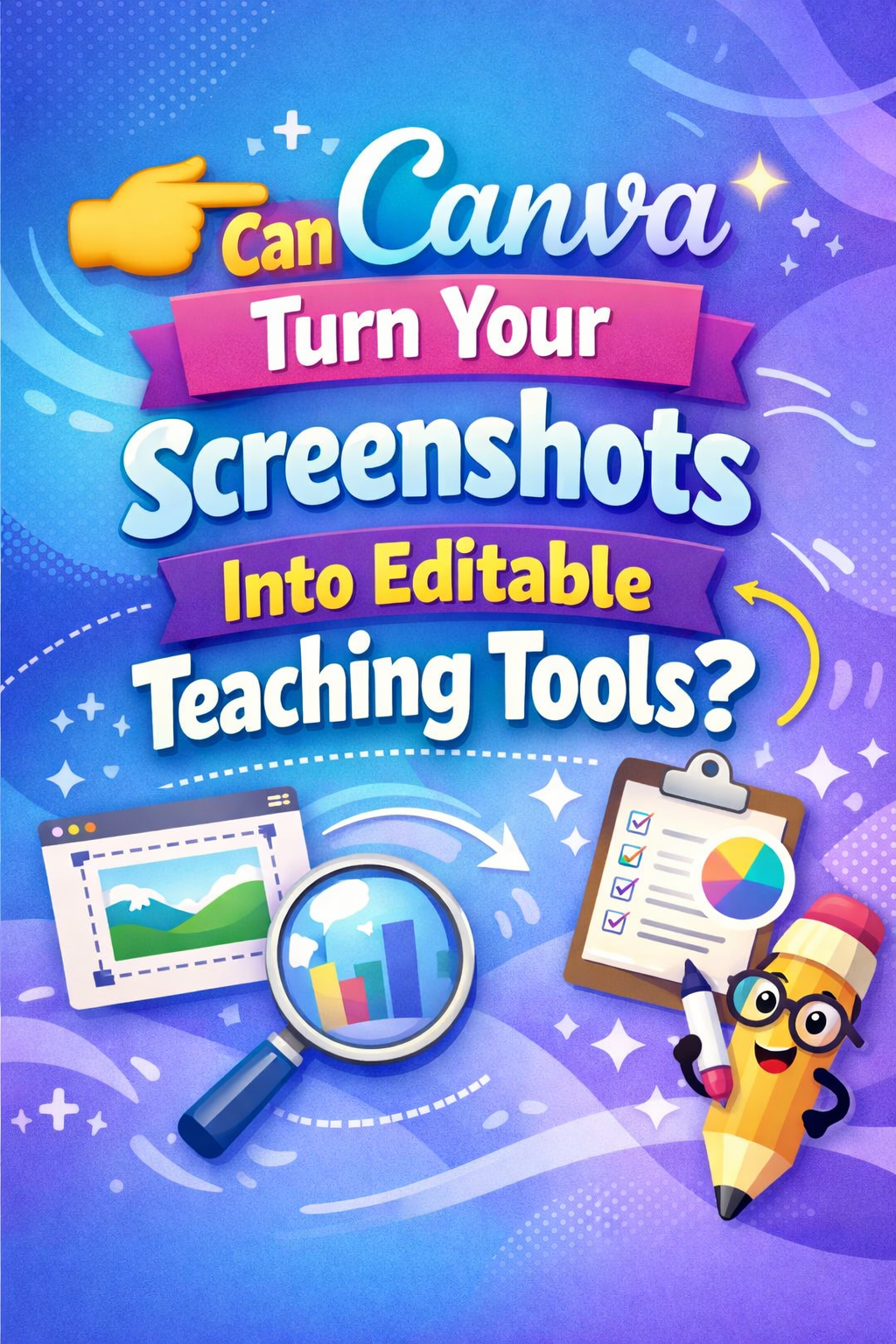
Have you ever taken a screenshot and wished you could just edit it?
Maybe you wanted to:
Until now, that meant retyping, rewriting, or recreating everything from scratch.
But Canva’s newest AI feature, Magic Layers, is about to completely change that.
🎥 Watch It in Action
Read More
🔍 Blog Post Synopsis
This post introduces a Shakira Medley Body Percussion Play-Along designed specifically for younger elementary music students. It builds on last week’s rhythm activity by adding movement-based learning that helps students internalize beat, rhythm, and musical concepts through engaging, non-locomotor actions. The post outlines how each note value is paired with a simple movement, explains how to use the free manipulatives to prepare students, and shares a student-led teaching strategy using a spinning name wheel. Together with the previous rhythm play-along, this activity provides a flexible, multi-grade resource that supports musical understanding while celebrating women in music.
Read More
One of the most common questions music educators ask when exploring MusicFirst Elementary is:
“Is this a 1:1 curriculum?”
The short answer is no — and that’s actually one of its many strengths.
MusicFirst Elementary was designed to be a flexible music curriculum that works in a variety of classroom technology environments. Whether you have one device, center rotations, or a full 1:1 setup, the lessons and creative tools can adapt to your teaching style.
Let’s take a closer look at what that flexibility can look like in the elementary music classroom.
Using MusicFirst Elementary with One Device
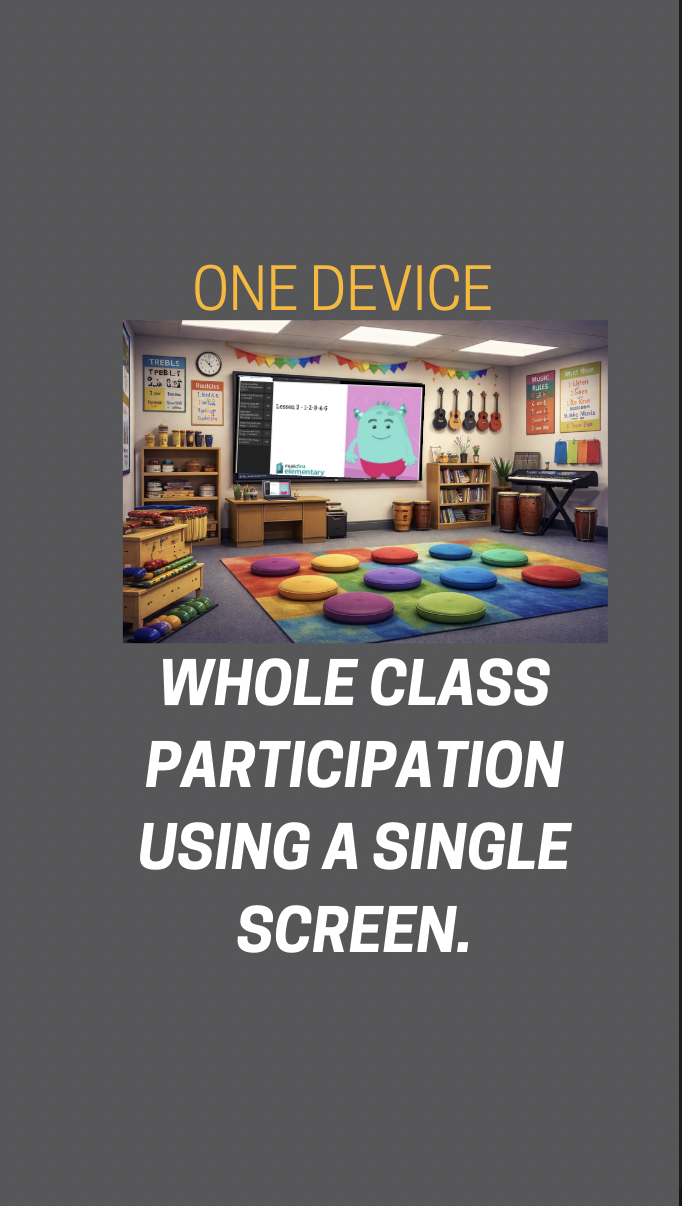
Many elementary music rooms have one teacher's computer connected to a projector or interactive board. MusicFirst Elementary works beautifully in this setting.
Teachers can:
Display activities for the entire class
Model musical concepts together
Guide listening, movement, and analysis activities
Demonstrate creative tools before students try them
Display songs to sing and perform
In this setup, the curriculum supports whole-group instruction while still allowing students to participate through movement, instruments, singing, and discussion.
This approach keeps the focus on musical learning rather than screen time, while still integrating technology meaningfully.
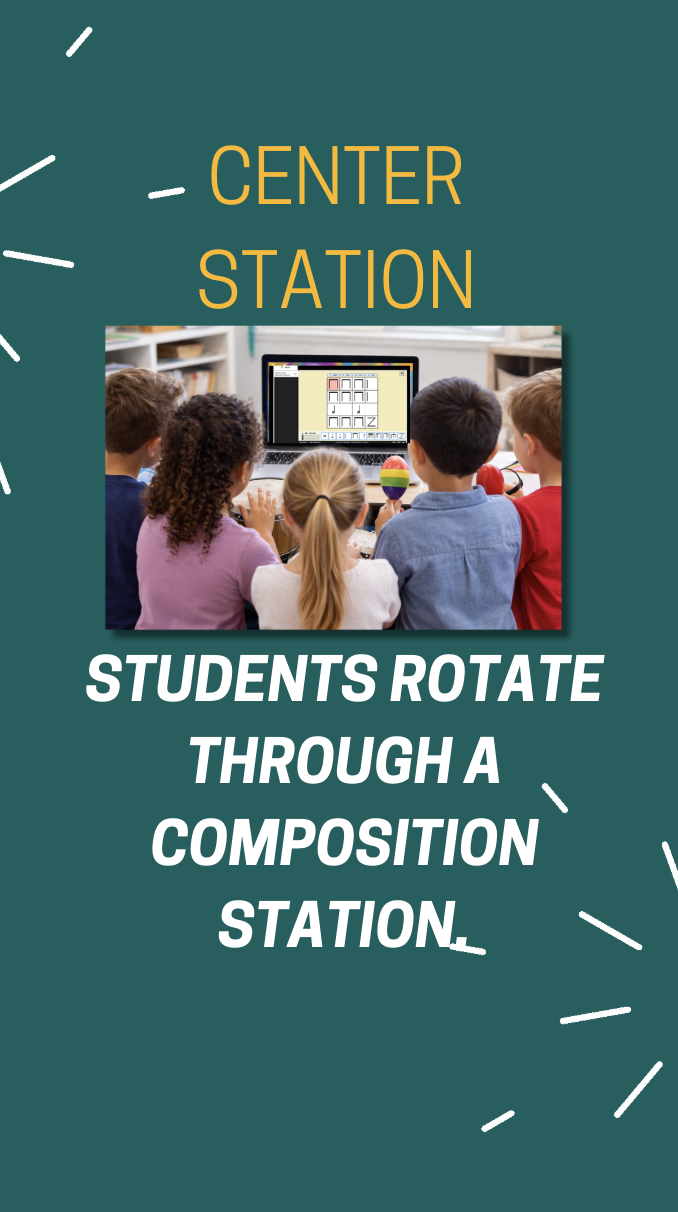
Using MusicFirst Elementary as a Center Activity
Another popular option is using MusicFirst Elementary as a technology station or center.
During center rotations, students can:
Explore interactive music activities
Reinforce rhythmic and melodic concepts
Work collaboratively in small groups
Engage with creative music tools
Perform Boomwhacker/recorder/ukulele play-alongs
Decode melodies and rhythm patterns
For example, while one group is working with barred instruments, another group might rotate to the MusicFirst Elementary center to complete an interactive activity related to the same musical concept.
This model works especially well for differentiation and blended learning, allowing students to practice skills at their own pace.
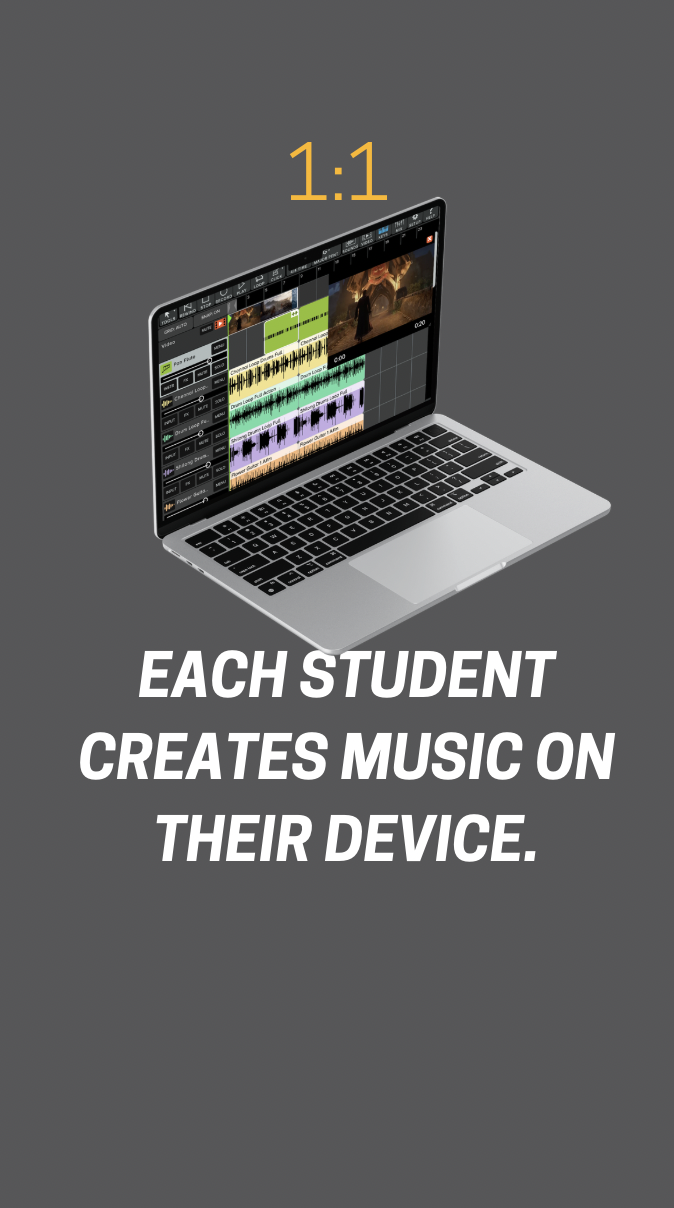
Using MusicFirst Elementary in a 1:1 Environment
In classrooms where students have individual devices, MusicFirst Elementary offers even more possibilities.
Students can:
Work independently on music activities
Create their own musical ideas using creative tools
Explore musical concepts through guided lessons
Complete projects or extensions related to classroom learning
Podcast about their favorite composer or performer
Score movies!
Teachers can use this setup for practice, reinforcement, or creative exploration, while still guiding the learning process.
The Key Takeaway: It Works in Any Classroom
Technology access varies widely from school to school, and MusicFirst Elementary was designed with that reality in mind.
You can successfully use the curriculum with:
MusicFirst Elementary allows you to decide how technology fits into your teaching, rather than forcing your classroom to fit a specific technology model.
🎥 Watch the short video explaining this FAQ here: