
What Can Help You Survive Your First Elementary Music Job?
Starting your first elementary music teaching job can feel exciting, overwhelming, inspiring, and exhausting all at once. You are learning names, building routines, figuring out curriculum, managing instruments, and trying to stay one step ahead of hundreds of students every single day. The good news? You do not need to have everything perfectly figured out during your first year.
Below are five practical ideas that can help you save time, build confidence, and create a positive classroom environment right from the beginning.
1. Explore Free Curriculum Trials — and Ask for Extensions
Many elementary music curriculum companies offer free trials, and these can be incredibly valuable during your first year of teaching. Instead of only exploring the curriculum for a few days, ask the company if they would extend your trial for three to four months. Many companies are willing to do this for new teachers.
An extended trial allows you to:
• explore the curriculum thoroughly
• see how students respond to different lessons
• test activities with different grade levels
• determine what fits your teaching style
It also gives you time to compare resources before your school invests in a subscription.
2. Create Foundational Lessons You Can Adapt
One of the biggest time-saving strategies during your first year is creating lessons that can be adjusted slightly across multiple grade levels.
For example:
• Create one foundational lesson for Kindergarten and adapt it slightly for Grade 1.
• Create another foundational lesson for Grades 2 and adapt it slightly for Grade 3.
• Create another foundational lesson for Grades 4 and adapt it slightly for Grade 5.
This approach saves planning time while still allowing you to meet students where they are developmentally. Once you begin assessing your students’ musical understanding and skill levels, you can make small changes to pacing, instruments, movement, literacy, or questioning.
3. Observe Classroom Teachers
One of the best professional development opportunities in your building is right down the hallway.
Spend time observing classroom teachers whenever possible. Watching how they transition students, manage behaviors, communicate expectations, and build relationships can provide valuable insight into your students and school culture.
You will also begin to notice:
• which students need extra support
• classroom routines students already know
• behavior strategies that work well with specific classes
• learning styles and personalities
These observations can make your own classroom management much smoother.
4. Begin the Year with an “All About Music” Activity
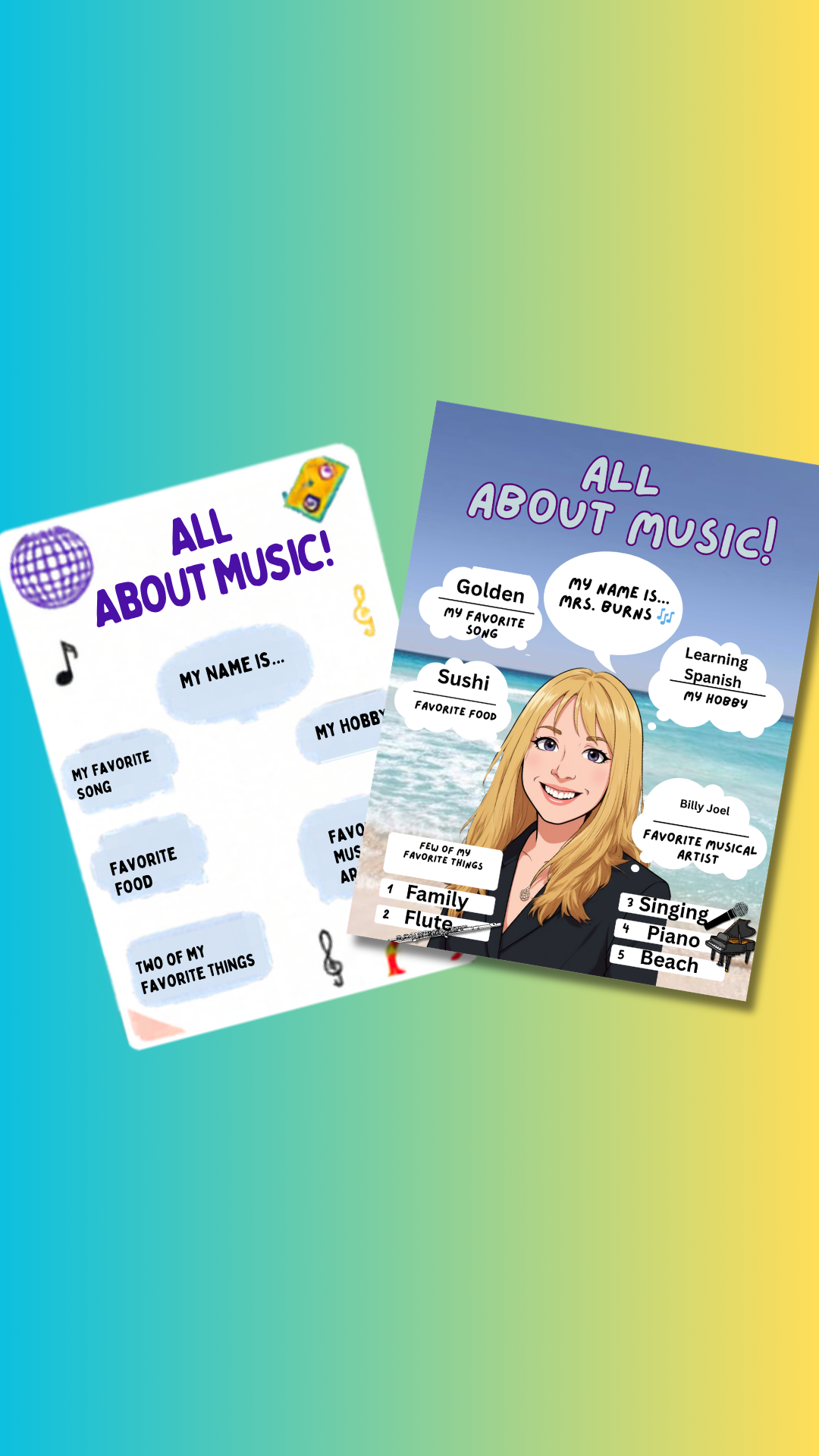
An “All About Music” activity is a fantastic way to get to know your students while also learning about their musical interests and experiences.
Students can share:
• favorite songs
• instruments they enjoy
• musical activities outside of school
• favorite artists or genres
• what they hope to learn in music class
If you teach 500+ students, level this activity up by having students record short videos using your school-provided learning management system (LMS) like Seesaw or using a recording tool the school may provide like Loom, Screencastify, etc.. Not only does this help you learn about them, but it also allows you to hear students pronounce their names correctly so you can practice saying them accurately.
I have a few “All About Music” activities available on my Buy Me a Coffee extras page.
5. Create Seating Charts Immediately
Seating charts are one of the simplest ways to create structure at the beginning of the year.
They help you:
• learn names more quickly
• establish routines and expectations
• support classroom management
• organize instrument distribution and movement activities
As students demonstrate responsibility, you can always introduce occasional “free seating” days as a reward. Starting with structure first often creates a smoother learning environment for everyone.
Your first elementary music job is a learning experience, and no teacher has everything mastered during year one. Give yourself permission to grow gradually, reflect often, and celebrate the small victories along the way.
The routines, systems, and lesson foundations you create during your first year will continue to support you for many years to come.