Part 2: Celia & Tito: Turn a Steady Beat Play-Along into a Rhythm-Reading Challenge!
A couple of weeks ago, I created a steady beat body percussion play-along featuring Celia Cruz and Tito Puente’s recording of “Aquarius / Let the Sunshine In.”
Cruz and Puente recorded their version in 1969, combining two songs from the Broadway musical Hair with the energy and rhythms of Latin music. The recording worked beautifully for steady beat practice—but I knew it could also become an engaging rhythm-reading activity.
So this week, I turned it into a steady beat rhythm play-along!
What Rhythms Will Students Perform?
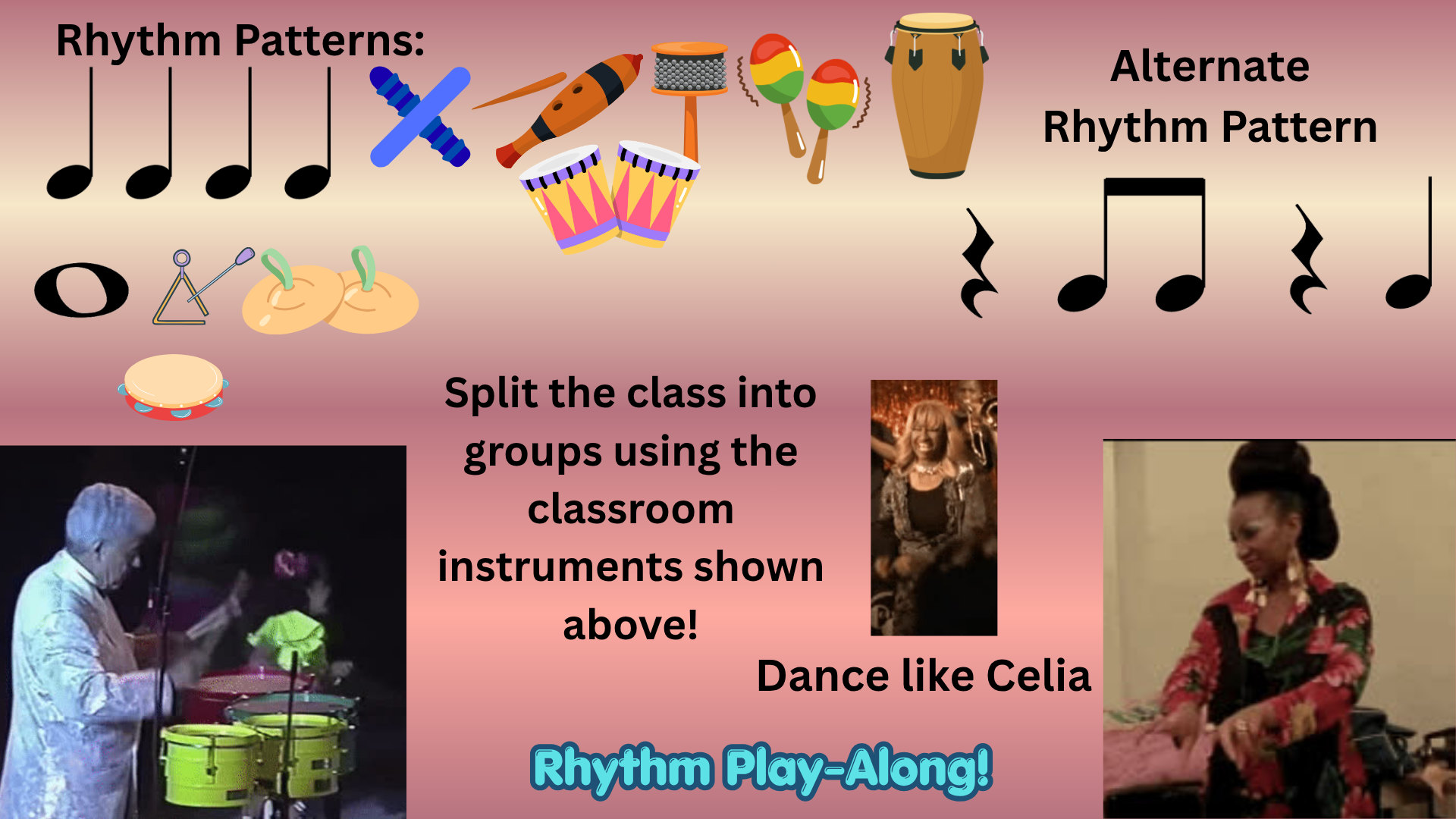
Most of the play-along features quarter-note patterns with whole notes mixed in. This makes it intuitive for younger students who are beginning to read and perform rhythms.
For older elementary students—or students who are ready for an additional challenge—I included an alternate rhythm pattern. Because the recording has a quick tempo, this pattern can be tricky!
If your students need more time to process the rhythms, use YouTube’s playback-speed settings to slow down the video. Once they feel successful, gradually increase the speed until they are ready to perform with the original recording.
Divide the Class into Instrument Groups
Since the steady beat remains consistent throughout the recording, I added different classroom percussion groups to create musical variety. After all, more than 25 students playing rhythm sticks together for two or three minutes can become a little challenging to listen to!
Try dividing your students into these groups:
Woods: Rhythm sticks and guiros
Drums: Hand drums and other classroom drums
Metals: Triangles, finger cymbals, and tambourines
Feel free to use the instruments you already have and adapt the groupings to fit your classroom.
The tambourines are featured during the whole-note section. Students can strike the tambourine on beat one and shake it on beats two, three, and four. This gives them a physical and musical way to experience how one whole note lasts for four beats.
Extend the Activity
Here are a few ways you could use the play-along:
Begin with the body percussion play-along before adding instruments.
Have students speak or clap each pattern before performing it.
Assign one rhythm to each instrument group. Use the manipulatives to assist with this.
Invite students to rotate instruments between sections.
Slow down the video when introducing the more challenging pattern.
Ask students to create a new four-beat rhythm to perform with the recording.
Download the Free Manipulatives
I also created free manipulatives to use with the activity. Download them from the elmusedtech Extras page.
Try the play-along with your students and bring rhythm reading, steady beat practice, and the vibrant sounds of Celia Cruz and Tito Puente into your elementary music classroom!